
Inbound marketing is not dead.
But some of the tactics that became synonymous with inbound marketing probably should be.
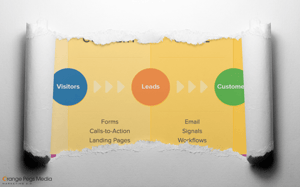
For years, the formula was fairly predictable:
-
Write blog posts
-
Optimize them for Google
-
Promote them on social media
-
Offer an ebook or guide
-
Put it behind a form
-
Capture an email address
-
Add the contact to a nurture sequence
-
Eventually, turn that lead over to sales
That model helped define an entire generation of digital marketing.
Some of it still works.
But customer behavior has changed. The places people discover businesses have multiplied. Search results increasingly answer questions before someone visits a website. Buyers consume content across different formats and platforms. And people have become much more selective about giving away their contact information just to access something useful.
So if inbound marketing means following the same checklist companies used a decade ago, then no, that version is not especially relevant anymore.
But that was never the most important part of inbound marketing.
The underlying idea is much simpler:
Create useful reasons for the right people to discover you, engage with you, take the next step, and continue the relationship.
That is still extremely relevant.
The playbook just needs to evolve.
What Was Inbound Marketing Trying to Solve?
Before inbound marketing became a collection of tactics, it represented a different way of thinking about how businesses attract customers.
Traditional marketing often relied heavily on interruption.
Cold calls. Direct mail. Advertisements placed in front of broad audiences. Purchased lists. Messages pushed toward people whether they were interested or not.
Inbound marketing asked a different question: What if we created something useful enough that the right people chose to come toward us?
Instead of only interrupting potential customers, businesses could answer their questions. Help them understand a problem. Make expertise easier to discover. Offer useful resources. Stay connected as interest develops. Then make it easy to take the next step when the timing is right.
That philosophy has not become less relevant.
If anything, customers now have more control over how they research businesses, compare alternatives, and decide who deserves their attention.
What has changed is how you earn that attention.
What Hasn't Changed: Customers Still Need Reasons to Choose You
Marketing channels change constantly. And, customer needs are more durable.
People still want to understand:
-
What is my problem?
-
What are my options?
-
Who can help?
-
Why should I trust them?
-
What will this cost?
-
How does this compare with the alternatives?
-
What should I do next?
Good inbound marketing helps answer those questions before, during, and after the sales process.
That might happen through an article, video, social conversation, workshop, case study, email, or an ai-generated answer that references your expertise.
Maybe it's a combination of them, at various stages of the customer's journey.
The format matters.
But the customer's need for useful information, relevance, proof, and a clear next step matters more.
That is why modern inbound marketing should begin with the customer journey, not a checklist of channels.
Search Has Changed
Search engine optimization has been deeply connected to inbound marketing for years.
And for good reason. If customers are actively searching for a problem your business solves, being discoverable at that moment can be incredibly valuable.
But discovery is no longer limited to a traditional list of search results.
People now ask questions through search engines, AI tools, social networks, communities, video platforms, forums, and other digital environments.
That changes the job of marketing. It is now to make your expertise understandable and discoverable wherever your audience looks for answers.
Traditional SEO still matters. But so does answer engine optimization. Clear explanations matter. Strong service pages matter. Useful FAQs matter. Original expertise matters. Content that can be understood outside the context of one specific web page matters.
And once somebody does discover you, another question immediately follows: Then what?
Visibility alone does not create a customer.
Inbound still needs to turn discovery into movement.
Content Has Changed
For a long time, inbound marketing and blogging were treated almost interchangeably.
Need more traffic? Publish more blog posts.
Need more leads? Publish more blog posts.
Need better SEO? Publish more blog posts.
Blogging is still useful (helllooo! I'm speaking to you through a blog post now!), but a business does not necessarily benefit from publishing four articles a month if none of them help customers understand something important or make a better decision.
Modern inbound content should have a job that is clear in the way it is written and how it flows to your website's next step.
It should:
-
Answer a recurring customer question
-
Explain a difficult problem
-
Make your expertise visible
-
Help someone compare alternatives
-
Address an objection
-
Provide evidence
-
Support a sales conversation
-
Help an existing customer get more value
-
Give someone a reason to return
And it does not have to be a blog article.
The best format may be a video, podcast, webinar, assessment, social post, email, case study, calculator, guide, workshop, or something else entirely.
The principle is still inbound: Create something valuable enough that the right person chooses to engage with it.
The execution is simply broader.
While that may feel overwhelming to hear as an entrepreneur, let me reassure you, it's not exactly bad news. The tools that got us here are the same tools you can personally leverage to get the work done—a lot cheaper, faster, and better than the options you had just a few short years ago. In fact, we teach people how to create one using ChatGPT, Gemini, and Claude for free! Click HERE to learn more
Lead Generation Has Changed
One of the most recognizable inbound tactics was the gated content offer.
Write a guide. Build a landing page. Ask for a name and email address. Deliver the guide. Congratulations: you have a lead.
That model can still work.
But not every useful piece of information needs to be hidden behind a form.
Sometimes helping someone immediately creates more value than capturing their email address.
A prospect who reads three useful articles, watches a video, returns to your website, and eventually requests a consultation may be far more valuable than someone who reluctantly hands over an email address to download an ebook they never read.
This does not mean forms are obsolete. It means the conversion should be worth something to the customer.
A workshop registration may make sense. Or a useful assessment, consultation, or genuinely valuable resource they can't find in AI mode on Google.
But collecting contact information is not the goal by itself. The goal is to create a meaningful next step in the relationship.
Publishing Is Not the Same as Distribution
The old inbound promise sometimes sounded almost automatic:
Create great content and people will find it.
That is not a safe assumption anymore. There is simply too much information competing for attention. Useful content still needs a path to the audience.
That might mean search, social media, email, paid promotion, partnerships, communities, events, networks, or referral relationships... or several of those working together
This is where the distinction between inbound philosophy and inbound tactics becomes important.
Paid advertising, for example, is often treated as the opposite of inbound.
But if you use paid promotion to put a genuinely useful workshop in front of a highly relevant audience, the customer's experience can still be fundamentally inbound.
You are giving them a reason to choose engagement.
Modern inbound is not ideologically opposed to distribution.
The Website Still Matters, but Its Job Has Changed
Your website used to be the center of almost every digital marketing journey.
Today, someone may learn a surprising amount about your company without visiting it.
They may encounter you through social media. Watch your videos. Read reviews. Ask an AI assistant about your category. See you mentioned in a community. Attend an event. Interact with your content several times.
Then, eventually, visit the website.
That makes the website no less important.
It makes its role more specific.
Once someone arrives, the site needs to help answer:
-
Am I in the right place?
-
Does this business understand my problem?
-
Can they actually help?
-
Why should I trust them?
-
What should I do next?
Inbound websites should therefore be built around movement.
Not simply traffic.
A thousand visitors who leave confused are less valuable than a smaller number of relevant visitors who understand the value and take meaningful action.
Inbound Should Not End When Someone Becomes a Lead
This may be the biggest limitation of the old inbound funnel.
A lot of inbound marketing focused heavily on attracting visitors and converting them into leads.
Then sales took over. Mayyyyyyybe there was attention on emails, but they were sporadic and sales-focused, not useful for the recipient.
But customers do not experience your company as separate marketing and sales departments. They experience one relationship.
Someone discovers your business. They become interested. They engage. They evaluate. They speak with someone. They make a decision. They buy. They experience what you promised. They decide whether to continue. They decide whether to tell somebody else.
Modern inbound should support that entire journey.
At Catalyst, we think about that through five stages (called "Pirate Metrics"):
1 - Acquisition
The right person becomes known to the business.
That may happen through search, content, an event, a signup, a referral, or another meaningful engagement.
They go from stranger to lead.
3 - Activation
They do something that moves the relationship forward.
They participate.
They engage.
They experience value.
They take action instead of remaining a passive contact.
3 - Revenue
The relationship becomes commercial. The prospect becomes a customer. Deals are won. Contracts are signed. Payments are made.
4 - Retention
The business continues creating enough value for the relationship to continue.
5 - Referral
A satisfied customer introduces someone else, shares their experience, provides a testimonial, or otherwise expands the relationship.
Seen this way, inbound is not merely a traffic strategy.
It is a customer journey strategy.
Modern Inbound Marketing Is a Connected System
That brings us back to the original question: Is inbound marketing still relevant?
Yes.
But modern inbound marketing is not:
-
SEO over here
-
Blogging over there
-
Social media somewhere else
-
A downloadable guide hidden behind a form
-
An email sequence nobody has updated in three years
-
And a sales team operating independently from all of it
The pieces need to connect.
-
Someone discovers an answer, then...
-
The answer leads naturally to something useful, then...
-
That interaction creates another reason to engage, then...
-
The business learns what the person cares about, then...
-
The next communication reflects that context, then...
-
Sales understands what happened before the conversation, then...
-
The customer experience continues after the sale, then...
- Somebody new enters the journey
That is inbound marketing at its best.
Not a collection of tactics. A connected system designed around how customers actually move.
Inbound Marketing Isn't Dead. The Old Checklist Is.
SEO, content, email, websites, social media, and lead generation still matter. But none of those activities are valuable simply because they once appeared in an inbound marketing playbook.
The question is whether they help the right customer move forward.
That is the part of inbound worth keeping. Attract people by being relevant and useful. Make engagement worthwhile. Create clear paths toward action. Support the buying process. Continue creating value after the sale.
Learn from what happens. Then improve the system.
The philosophy still works.
You just should not expect the tactics to remain frozen in time.
Build Inbound Around How Your Customers Actually Buy
Catalyst helps small businesses connect search, content, websites, lead generation, email, sales, and customer relationships around one customer journey.
Instead of implementing an old inbound checklist, we help you identify where customers are getting stuck and build the marketing needed to move them forward.
Explore Inbound Marketing Services