

Meditation Isn’t Another Task on Your Calendar
When your workday is packed with decisions, meetings, messages, marketing, customers, and the occasional fire that somehow became your problem, meditation can feel like one more thing you’re supposed to fit in.
That is often the first barrier.
You look at 10 or 20 minutes of meditation and think about everything else you could be doing with that time.
But meditation works better when you stop thinking about it as time consumed and start thinking about what it gives back.
The better question isn’t, “Can I afford to spend 15 minutes meditating?”
It’s, “How do I want to show up for the next three hours?”
Meditation can create space between the pressure you’re carrying and the decisions you’re about to make. Over time, it can become less like another obligation and more like the part of the day you actually look forward to.
Here are a few ways to make it easier to build into a busy workday.
1. Start smaller than you think you should
One of the fastest ways to make meditation unsustainable is to turn it into another performance goal.
You do not need to start with an hour every day.
Start with fifteen or thirty once a week.
The goal is not to prove that you are good at meditation. The goal is to build a practice you will actually return to.
Once the habit starts creating value for you, it becomes much easier to protect the time.
2. Attach it to something that already happens
Do not wait for your calendar to magically open up. It probably won’t.
Instead, connect meditation to an existing transition in your day.
Maybe you meditate before opening email. Maybe it happens after lunch. Maybe it is the buffer between two demanding blocks of work. Or, maybe you sign up for a live guided meditation that you step into.
Attaching meditation to something predictable removes one more decision from your day.
You are not constantly asking, “When should I do this?”
You already know.
3. Create a place your brain recognizes
You do not need a dedicated meditation room.
You do need a place that feels different enough from your normal working environment to create a mental shift.
Find somewhere comfortable and relatively free from distraction. Lower the lights. Put your phone on silent or move it out of reach.
Small environmental cues help too.
I often burn incense because scent creates a strong separation between “working” and “meditating.” I play music, generally meditation songs without lyrics. These two things can turn almost any space into a meditation space for me.
I also recommend keeping a journal nearby. This will be used to process the things you feel and the thoughts that invade your mind that may or may not be work-related. For me, it's a blank Google doc.
The point is not to make the setup elaborate.
It is to create a space where, for a few minutes, you are not solving anything.
4. Set up the technology before you begin
Guided meditation can be especially useful when your brain is moving quickly because you are not responsible for figuring out what to do next.
But technology can also become a distraction.
Set everything up before you start.
Personally, I play background music through Amazon Music’s standalone desktop player. That lets me control the music volume independently from the guided meditation.
That small detail matters.
If the music is competing with the facilitator’s voice, the experience becomes frustrating. If everything is set correctly before you begin, the technology disappears into the background.
Guided meditation is also one of the practices we incorporate into Catalyst Founder Enablement, where the goal is to help founders create more internal capacity for the pressure that comes with running a business.
5. Don’t wait until your brain is quiet—Make space before you need it
One of the most common reasons people skip meditation is also one of the best reasons to do it:
“My brain is way too busy today.”
You do not need to be calm before you meditate.
You do not even need to become completely calm while you meditate.
Your mind may wander. You may start thinking about a customer problem, an unfinished project, tomorrow’s meeting, or something you suddenly realize you cannot forget.
Sometimes the best thing you can do is write it down.
If a thought keeps pulling you away because your brain is afraid you will lose it, give it somewhere else to live. Jot it in your journal, add it to your brain dump, and then come back afterward.
This is useful for sleep too. As somebody who has suffered through insomnia most of my life, there is nothing that gets me to those precious zzzzzs faster than moving the thing out of my brain that's keeping me away, putting it in an environment that I know I can come back to.
You are not trying to force your mind into silence.
You are giving the noise somewhere to go.
Notice what comes up. Capture what needs to be captured.
Then come back.
That is the practice.
6. Stop trying to have a “good” meditation
Founders have a remarkable ability to turn almost anything into another scorecard.
Meditation does not need one.
You do not have to evaluate whether you were focused enough, relaxed enough, or disciplined enough.
Consistency matters more than perfection.
Fifteen imperfect minutes once a week you actually take are more useful than the ideal 30-minute daily sessions you continually postpone.
Get strategic with your meditations
Meditation can be powerful on its own. But sometimes it becomes even more meaningful when you have context for what is coming up—and a place to explore it with other people.
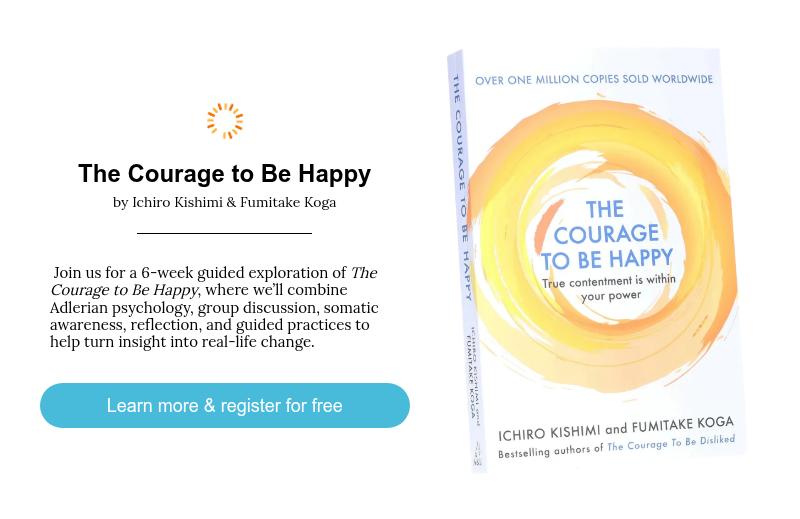
That is why we created the Catalyst Book Club.
It is not just a group discussion about a book. We use the reading as a starting point for a broader experience that combines psychoeducation, guided meditation, reflection, and conversation.
The goal is to create space to understand the ideas intellectually, notice how they show up in your own life and how you lead your business, and experience them rather than simply reading about them.
Each book club explores a different theme, but the experience is designed around the same idea: slowing down, becoming more aware of what is happening beneath the surface, and learning alongside other people who are doing the same.
Click HERE to learn more and sign up for our latest book club:
-1.jpeg?width=290&name=20260320_122400%20(1)-1.jpeg)