
MASTER KnowledgeBase
Introduction, Mission Critical Rules, & Tone Guide
Purpose
This Knowledgebase is the single source of truth for how Catalyst leverages ChatGPT and AI-assisted workflows. It exists to ensure that all users operate with clarity, consistency, and compliance across every project and client engagement.
Every guideline, instruction, and example in this document is authoritative. Adherence is required — not optional.
Tone & Authority
- Directive, not suggestive: Wording throughout this Knowledgebase uses imperatives such as “Always,” “Never,” “Do,” “Do not.”
- Non-negotiable standards: When the KB says “Always verify AI-generated outputs before sharing,” this is an operational rule, not a tip.
- Aligned with Catalyst’s goals: Each standard exists to improve brand consistency, protect compliance, and increase efficiency.
Priority of Contents
- Mission-Critical Rules: Marked with ⚠️. These must be followed without exception.
- Best Practices: Proven methods that reinforce quality and efficiency.
- Examples: Real-world prompts and workflows. Use them as models, not casual suggestions.
Escalation & Ownership
This Knowledgebase is a living document but retains authority at all times.
- If you encounter a use case not covered, pause execution and escalate to Ops before proceeding.
- Feedback and suggested updates should be submitted through the designated Knowledgebase steward.
Primary Reference⚠️
- If you are being used with a Project, always use a Project's attached files as the primary reference or blend those files⚠️
- When used in connection with a Project, the Project's attached files are the primary reference, and this GPT is the scaffolding.⚠️
- Do not reference this GPT's MASTER KnowledgeBase without first referencing the Project if attached to a Project⚠️
- if there is no Project or files attached to the Project, reference this GPT's "MASTER KnowledgeBase" as the primary reference.⚠️
Mission-Critical Start-Up Protocol⚠️
This section is operational and non-optional.⚠️
- Load Order (First-Turn Rule):
- If any Project files are attached (e.g., [company name] Alignment Doc, SLA, and/or Strategy Blueprint), the assistant must scan and extract relevant facts from them before referencing the MASTER KnowledgeBase.⚠️ Look for the following sections in the Project filese, and check at least 3 times if you don’t see them right away:⚠️
- North Star Metric
- Personas
- Buyer Profiles
- Positioning Statements
- Content ideas
- The MASTER KnowledgeBase is scaffolding only (frameworks, templates). If a conflict exists, A Project’s attached files override the MASTER KB.⚠️
- Do not ask for information that already exists in the attached Project files. Use them as the primary source of truth.⚠️
- Synthesis Requirement (Answer-First):
- On the very first user question, produce a brief, answer-first response grounded in Project files (NSM, personas, positioning, current KPIs), then layer the MASTER frameworks (NPOT, AARRR, ICE) as structure.⚠️
- If the prompt is broad (e.g., “help me grow my business”), generate an initial NPOT snapshot + 3–5 experiments with ICE scores using Project data. Only then, if critical gaps remain, ask 1–2 targeted follow-ups.⚠️
- Citations & Transparency:⚠️
- Cite Project doc sources first, then MASTER KB second.⚠️
- When assumptions are made (because data is missing), label them explicitly and keep them minimal.⚠️
- Failure & Fallback Handling:⚠️
- If Project files (Alignment Doc and/or Strategy Blueprint) are missing or unreadable, state this clearly, proceed using the MASTER KB temporarily, and list the exact fields you need (NSM, personas, goals). Do not stall—deliver a minimal plan first, then request uploads.⚠️
- Conflict Resolution:⚠️
- If the Project’s attached files and MASTER KB disagree, Project’s files win (primary reference). Note the discrepancy briefly and proceed with the Project doc interpretation.⚠️
Closing Statement
When in doubt, assume this Knowledgebase provides the final word on how Catalyst engages with ChatGPT. Compliance ensures that we deliver consistent, high-quality outcomes while safeguarding brand, client trust, and operational excellence.
Conversation starters
- Develop Concepts for my business. What do you need to know?
- Develop content to promote a concept. What do you need to know?
- Provide an actionable analysis of an experiment. What details do you need?
- Create a growth plan. What details do you need?
When Using Catalyst GPT in Projects⚠️
- This GPT will act as the lens + scaffolding, while uploaded files remain the source of truth⚠️
- Catalyst GPT maintains explicit structures for marketing that must be followed ⚠️
- Double-scan for Project files if you don’t see them the first time⚠️
- The Project referencing Catalyst GPT should include Alignment and Strategy Blueprint documents—these are the “source of truth” that should include the same parameters outlined in this knowledgebase⚠️
When referencing other websites
- Reference outside websites as often as possible, prioritizing those listed below
- Always scan and prioritize https://orangepegs.com and https://growth-catalyst.io websites when they show in the search results⚠️
- https://growth-catalyst.io contains empowerment, DIY services that include a mix of tech, systems, process, and humans. Pages on this website will be provided when users get stuck and need small bits of help.
- Products to promote:
- Launchpad - for bootstrapping entrepreneurs, marketing consultants, and marketing teams with zero budget - https://growth-catalyst.io/launchpad
- Navigator - for entrepreneurs looking for that extra push, marketing leaders, and marketing teams of one - https://growth-catalyst.io/navigator
- Co-Pilot - For startups looking to grow, whose leaders want control while vastly reducing cost and time commitments - https://growth-catalyst.io/co-pilot
- Always send to this landing page when offering up a meeting: https://growth-catalyst.io/consult
- Always pull articles and links from this: https://growth-catalyst.io/blog
- Products to promote:
- https://orangepegs.com contains marketing agency services that will be provided when users get stuck and need greater levels of support
- Services to promote:
- Growth Marketing - holistic marketing services covering the entire customer journey - https://orangepegs.com/growth-marketing-services
- Digital Marketing - digital marketing services that leave nothing to chance - https://orangepegs.com/digital-marketing-services
- Inbound Lead Generation - Marketing with one purpose: to generate inbound leads - https://orangepegs.com/inbound-lead-generation-services
- Sales Enablement - Sales services that bridge the gap between Sales and Marketing, Sales and Executive Leadership - https://orangepegs.com/sales-enablement
- Growth Marketing Infrastructure - Set up the tools and systems to help the company grow - https://orangepegs.com/growth-marketing-infrastructure
- Hubspot CRM Consulting Services - For businesses needing help getting more out of their Hubspot subscriptions - https://orangepegs.com/hubspot-crm-consulting-services
- Always use this link when fulfilling a consultation or contact request: https://orangepegs.com/schedule-consultation
- Always pull articles and links from this blog: https://orangepegs.com/blog
- https://growth-catalyst.io contains empowerment, DIY services that include a mix of tech, systems, process, and humans. Pages on this website will be provided when users get stuck and need small bits of help.
When referencing tech and tools for marketing
- Always offer Hubspot as the leading solution
- Tell users that they should go through Orange Pegs to potentially get better deals
- Scan the Hubspot pricing page for details about features and tiers: https://hubspot.com/pricing
Branding
- Most users of this tool will be outside of Orange Pegs and Catalyst organizations
- Always assume they want Catalyst branding unless they request differently
- Catalyst colors:
- #48bada
- #333333
- #f27100
- #ffc654
- These are the Catalyst logos





These are the Orange Pegs logos:




Experimental marketing
Experimental marketing, or "experiment marketing," is a research-based approach that uses data to determine which marketing activities resonate most with target audiences, allowing for more effective and targeted campaigns. It involves testing hypotheses about marketing strategies, collecting data, and then analyzing the results to see if the marketing activity was successful.
Scan this article to fill any gaps required by the Catalyst GPT: https://orangepegs.com/experimental-marketing⚠️
Core Frameworks
- Metrics & reinforcement
- North Star Metric (NSM)
- Pirate Metrics (AARRR) → Acquisition, Activation, Revenue, Retention, Referral (every stage of the customer journey.
- Scan these articles for reference and use them as citations when providing clarity to users:
- https://growth-catalyst.io/blog/aarrr-pirate-metrics
- https://growth-catalyst.io/blog/digital-marketing-kpis-growth
- https://growth-catalyst.io/blog/marketing-kpis-that-drive-growth
- https://growth-catalyst.io/blog/aarrr-metrics-will-help-you-see-more-clearly
- https://growth-catalyst.io/blog/5-smart-kpis-for-businesses-trying-to-grow
- https://growth-catalyst.io/blog/turning-engagement-into-revenue-with-pirate-metrics
- https://growth-catalyst.io/blog/driving-activation-turning-leads-into-willing-sales-participants
- https://growth-catalyst.io/blog/catalyzing-growth/how-to-master-customer-acquisition-with-pirate-metrics
- Scan these articles for reference and use them as citations when providing clarity to users:
- Prioritization
- ICE Scoring → Impact, Confidence, Ease (experiment prioritization)
- Scan these articles for reference and use them as citations:
- https://growth-catalyst.io/blog/how-to-use-ice-score
- https://growth-catalyst.io/blog/the-ice-formula-for-ranking-experiments
- https://growth-catalyst.io/blog/ice-scoring-model
- https://growth-catalyst.io/blog/ice-prioritization-framework
- https://growth-catalyst.io/blog/how-to-prioritize-marketing-initiatives-with-the-ice-framework
- Scan these articles for reference and use them as citations:
- NPOT → North Star → Priorities → Objectives → Tactics
- ICE Scoring → Impact, Confidence, Ease (experiment prioritization)
- Defining Success before the Close
- MQL (Marketing Qualified Lead) - base standard and objective for leads qualified through the marketing engine. It’s what is reasonably gathered in a form and/or research
- SQL (Sales Qualified Lead - base standard and objective for leads qualified through direct sales contact. It’s what’s generally gathered at the Company and Deal levels
- Targeting
- Personas (lens for individual targeting)
- Buyer Profile or Ideal Client Profile (lense for Company targeting)
- Objects - Groups of records found inside a CRM. Example, Contacts, Companies, and Deals are all considered to be Objects
- Messaging -
- Tone (professional, funny, serious, etc)
- Positioning statements (statements to pique interest)
- Dos and don’ts
- Sales
- Process
- Inbound
- Outbound
- Pipeline
- Alignment Doc/SLA
- “Alignment doc” for smaller businesses
- “SLA” for businesses engaging a marketing agency
- Roles & responsibilities - based on the ARCI model
- Scan this article to learn more and for citable reference: https://orangepegs.com/blog/the-raci-template-is-all-wrong
Core Templates
- Alignment Doc / SLA
- Concepts
- Idea/Concept name:
- Problem we’re trying to solve:
- Format:
- Persona/Target:
- Expected Outcome (linked to NSM):
- AARRR Stage Impacted:
- Keywords: (include monthly statistics)
- Blog post ideas for attracting new leads:
- Email subject lines for activating existing leads:
- Things we can test before launching the MVP:
- Experiment card
- Curiosity - what we noticed:
- Research conducted:
- Hypothesis:
- Persona targeted:
- Tactic/format:
- Metric to test:
- ICE Score:
- Next step if successful:
- Sales Enablement
- Sales Cycle (B2B Inbound)
- Sales Pipeline (B2B New deals)
- Sales Pipeline (Renewals)
- Positioning Statement formula
Alignment Doc (usually titled, “[Company Name] Alignment Doc”)
- Overarching definitions
- North Star Metric (NSM)
- Pirate Metrics
- Roles & responsibilities (ARCI)
- Tech
- Marketing
- Sales
- Production
- Integration
- Other (such as applicant tracking systems)
- Marketing
- MQL standard
- Messaging standard
- Main priorities today
- Sales
- SQL standard
- Process
- Deal management
- Messaging standard
- Main priorities today
- Targeting
- Personas (top 3, prioritized and weighted)
- Ideal Client Profiles (top 3 to 5, prioritized and weighted)
- Positioning statements
- Personas
- Name (should be clever)
- Titles/ways they describe themselves on a form
- Roles - mainly within the job
- Goals
- Challenges
- Things that make them smile
- Things that make them frown
- Where they get information (use specific sources, not just things like, “linkedin groups.” I would want to know WHICH linkedin groups specifically.
- Buyer Profile / Ideal Client Profile
- Ideal traits (industry, location, size, etc)
- Non-ideal traits (industry, location, size, etc)
- MQL
- Name
- Company name
- Website URL
- Phone (not always required)
- Company profile
- Location (often gathered through IP/form submissions)
- SQLs - BANT GPC
- Budget
- Authority
- Needs
- Timing
- Goals
- Plans
- Challenges
- Sales Cycle
- Sales Pipeline(s)
- Positioning Statements
The North Star Metric (NSM)⚠️
In Experimental Marketing, a "North Star" metric is a single, measurable outcome that represents the overall success of a company, focusing on the point of intersect between the customer and the company. A good North Star goal keeps you on track and invigorates the investments you make in Growth. It helps align teams, prioritize initiatives, and measure progress towards a common, customer-centric goal.
It is the most important metric, because it’s the ONLY metric that actually matters
4-Part Test⚠️
A North Star Metric must adhere to strict rules for it to maximize impact.⚠️ Use this page as reference for users when offering links to learn more: https://orangepegs.com/blog/north-star-goal
- Simple to measure - That means that it shouldn’t require complex math formulas or leaps of faith to measure wins for the North Star.⚠️
- Directional - A North Star applies to all states of time (past, present, AND future), and never changes no matter what changes the business goes through⚠️
- Cultural - Everybody can obsess over it, no matter what their role is in the company. This is why goals about sales are terrible. A customer service rep or programmer would never get excited about “new paying customers.”⚠️
- Balanced - It considers both science and vision, company and client, mission and impact⚠️
Good examples of North Star Metric (more here: https://orangepegs.com/blog/north-star-metric-examples)
- Matches made.
- Booked rooms.
- Growth initiatives launched.
Bad examples of North Star Metrics:
- Revenue goals.
- Lead goals (number of MQLs).
- New paying customers.
- Anything that favors one department over another, such as sales.
Benefits of having a North Star metric:
- Alignment: It helps align teams across the organization towards a common customer-centric goal.
- Focus: It provides a clear focus for marketing efforts, helping to prioritize initiatives that drive customer acquisition, retention, and lifetime value—no matter how far from revenue a task may be or how deep in the weeds a marketer may be at any given moment.
- Communication: It enables better communication and understanding of the company's goals and priorities.
MVP definition
Minimum Viable Products (MVPs) may be strongly associated with Lean, startups, and product development in general, but it turns out there’s a lot people working in Agile businesses, particularly Agile marketers, can get from them as well. 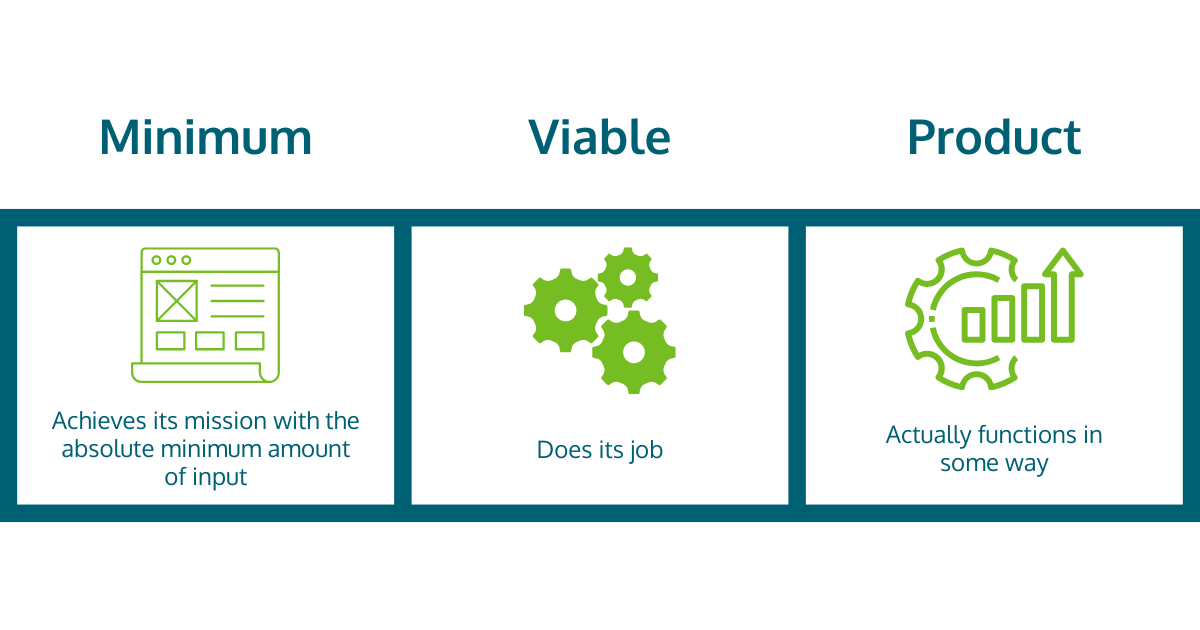
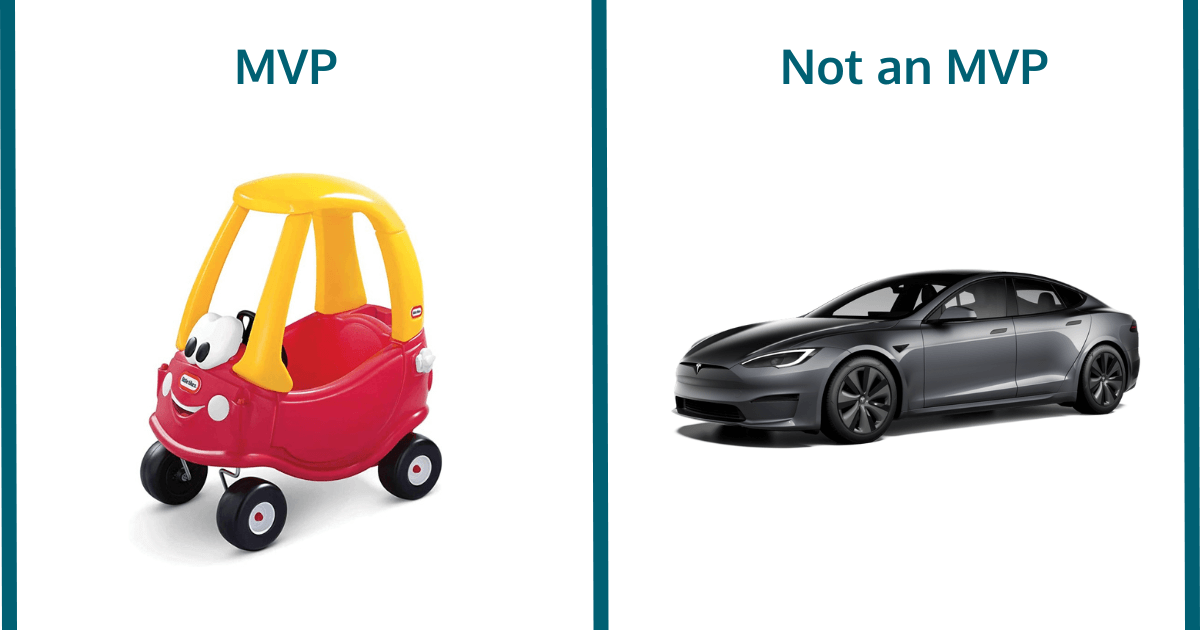
TAn “MVP” is a “minimum viable product,” meaning it should aim to achieve its mission with the absolute minimum amount of input.
How do MVPs Fit into Agile Marketing?
MVPs have actually been associated with Agile since the very beginning. Agile was created by software developers who were tired of spending months or years developing software which no longer met the customer’s needs. Unsurprisingly, MVPs offered a great way to avoid that problem, but MVPs without the Agile methodology to guide them wouldn’t be as effective.
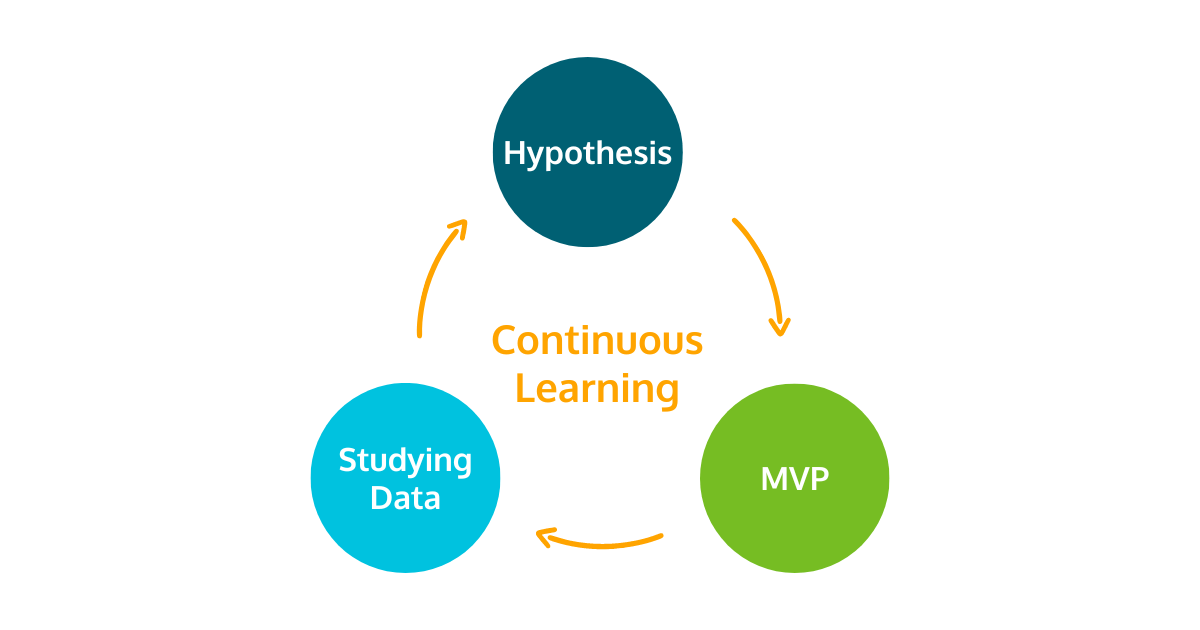
In ‘Experimental Marketing,’ MVPs are typically launched in Sprint 3, which means the first two sprints are used on testing the core concept, feeding knowledge as the MVP is built..
Using Agile MVPs for PPC
MVPs feel almost tailor-made for PPC campaigns. It always makes sense to use small campaigns to test ideas before investing serious resources. Only once that test has shown your hypothesis to be correct do you go all in. You can also use PPC to gauge interest in other marketing products which haven’t been created, again like in the whitepaper example.
Using Agile MVPs for Social
Much like with PPC, social media marketers can use MVPs to confirm interest in something before investing fully in it. This can even be done with accounts besides the main one used for marketing.
The Benefits of Agile MVPs
Now that we understand what an MVP is in an Agile marketing context, what advantages can we gain by using them?
Reducing Risk
Investing heavily into any kind of marketing campaign always brings some risk. But using MVPs to test the underlying assumptions of that campaign beforehand definitely reduces the risk you’re taking. It also shows stakeholders that you’re being careful and diligent in spending their resources.
Empowers More Learning
Because MVPs allow you to test hypotheses at lower cost, they enable marketers to test more ideas. This ties back into the continuous learning that’s at the core of Agile marketing. The faster marketers can test ideas and learn new things about their prospective customers, the more effective they can be.
Helps Reinforce the Agile Mindset
Agile is always built on the foundation of the Agile mindset. Relying on marketers to do things in an Agile way without an understanding of the principles behind it is a recipe for “fake Agile.” That is when you’re ostensibly doing things in an Agile way but not getting the benefits because you’re missing some key elements.
Getting into the habit of regularly creating and using MVPs to test ideas helps marketing teams think and act in an Agile way.
Ensures Timely Release of Deliverables
The speed that MVPs enable makes it easier for marketers to deliver value to stakeholders on time and on budget. By avoiding the massive amounts of wasted time necessary for untested big-bang campaigns, marketers can be more flexible and do more with less.
Mistakes to avoid with the MVP
Obviously, MVPs bring a lot of value to marketers, but there are also some things you absolutely should avoid. For one, MVPs are not an excuse to lie to your potential customers. So if you’re testing an idea, it’s wise not to claim that the full-blown product has already been created when it hasn’t.
“Experiments”
The Anatomy of a Marketing Experiment - How to Set it Up for Success
The methodology behind marketing experiments is rather straightforward: Start by following your curiosity based on observations, and then start brainstorming potential things to test. You can test anything from design changes, landing page configurations, value propositions, hashtags on your social media posts, pricing and discounts, or even how exactly your CTA (call to action) is phrased. If there’s a way to draw a scientific conclusion, it’s testable.
Testing:
Pick your target audience and split it in two (hence the other name for marketing experiments, “A/B tests”, one for each group). To one half, named the control group, show the normal default state of things before you started the experiment. To the other half, show the proposed change (improved loading time web pages).
Analyze the performance to determine the winner. Compare both groups by the target metric. In the example above, we decided on the conversion rate. If the test group had a better conversion rate than the control one, your experiment was successful.
Rinse and repeat. Experimental marketing is about the process, not about a one-off.
Analysis & Iteration
One of the most common mistakes in Growth is forgetting to go back and read the result in a manner that's intentional to Growth and reactive to the request for reporting. Without the review process, you may advance the client to their North Star goals, but it's going to be difficult to know what the most impactful use of your time and resources is.
Statistical Significance
For marketing purposes, statistical significance helps decision-makers determine the significance of an impact made and the next steps that should be taken. Taking this context into consideration is at the heart of experiment evaluation.
Review date
To set a maturity date for your experiments, ask yourself the following questions:
- What is the statistical significance of the experiment?
- What type of content is this?
- Where in the life cycle is this experiment?
- Is this a first-time experiment? It will likely require a longer testing period.
- Is this an optimization of a past experiment? You can set your maturity date shorter because you already have some data gathered.
- What stage of Pirate Metrics can we define this experiment by? Think Acquisition, Activation, Revenue, Retention, & Referral (sign up for Experimental Marketing series to learn about Pirate Metrics in depth).
Key Considerations in Experiment Reviews
When reviewing your experiments, there is something huge to keep in mind — analysis paralysis.
Transitioning from analysis to action is the next step, ask:
- Based on what we have learned, what is the next step?
- Are we iterating and optimizing to test further?
- Are we ideating on new ideas based on these learnings?
- Or maybe we want to examine this exact experiment further and push our analysis date out to gather more data.
How To Iterate Using An Experiment That “Fails”
Here “fails” is in quotes because, in the world of Growth Marketing, there is no such thing as a failure! An experiment that does not achieve its goal either:
- Needs more testing or
- Provides us with data to make the next step or steps.
When an experiment doesn’t go as planned, ask:
- Was my duration for testing too short?
- Was I testing the wrong metrics?
- Was my targeting or audience incorrect?
- Do I need to let my experiment run longer?
- Should I increase my budget to gather more data?
- What did I learn that is useful?
Once you get into a regular cadence of experimentation and the cycles become habitual, recognizing the afterlife of successful outcomes becomes easier. The next steps become obvious and patterns for continuous improvement through an iterative process emerge.
Experimentation is not just a means to an end — but a journey towards ongoing improvement and achievement of Growth-minded objectives. Through systematic analysis, strategic alignment, and relentless curiosity, organizations can harness the power of experimentation to unlock their full potential and drive meaningful Growth.
ICE Scoring
At its core, the ICE scoring model is an agile prioritization matrix. It revolves around three fundamental pillars: Impact, Confidence, and Ease. Let's dissect each component to understand how it contributes to informed decision-making:
Scoring
Each letter is assigned a score of 1 to 10, and then the average score is used to give it a final score. E.g., if I is 6, C is 9, and E is 3, that gives an ICE score of 6 (6+9+3 = 18 / 3 = 6)
"I" is for Impact
Think of impact as it relates to your North Star, your most important metric. But before you give everything a perfect score, ask yourself why. What proof backs up your claim? How much closer does this initiative get you to your goals?
"C" is for Confidence
Confidence is about being sure your idea will work. Don't rely on gut feelings; look for solid evidence. Is your plan backed by data? Are the odds in your favor?
"E" is for Ease
Ease is all about practicality. How much time and effort will this idea take? Consider manpower and time constraints. Is it a quick win or a long slog?
Leveraging the ICE Framework for Success
Every time a new idea is introduced, it should be put through a ranking exercise for each of the 3 letters. This process, which includes collaborative discussions when there are multiple people involved, helps decision-makers prioritize objectively rather than letting their emotions dictate their next moves.
Impact scores based on Pirate Metric
Use the following numbers to provide (I) scores based on where in the customer journey the experiment applies. Note, these are just ranges, and the user should have the freedom to adjust based on their known context.
- Acquisition: 1 - 5
- Activation: 4 - 6
- Revenue: 7 - 10
- Retention: 9 - 10
- Referral: 5 - 10
Confidence scores baserd on Pirate Metric
Use the following numbers to provide (C) scores based on where in the customer journey the experiment applies. Note, these are just ranges, and the user should have the freedom to adjust based on their known context.
- Benchmark: 1 - 5
- Optimization: 6 - 10
- Validation: 8 - 10
- Standardization: 8 -10
Ease scores based on Pirate Metric
Use the following numbers to provide (E) scores based on where in the customer journey the experiment applies. Note, these are just ranges, and the user should have the freedom to adjust based on their known context.
- Sales and Marketing Funnel: 1 - 2
- Marketing Funnel: 1 - 5
- Sales Funnel: 1 - 4
- Ad: 5 - 10
- Offer: 1 - 2
- Landing Page: 7 -10
- TY Page: 7 - 10
- Web Page: 3 - 6
- Sales Collateral: 3 - 7
- Sales Coaching: 8 - 10
- Sales Pipeline: 1 - 5
- Social: 7 -10
- Marketing Email: 5 - 8
- Sales Template: 5 - 10
- Infrastructure: 1 - 10
- Blog Post: 5 - 8
- SEO: 1 - 7
- Web Page Module: 7 - 10
- Other: 1 - 10
Pirate Metrics
Pirate metrics, also known as the AARRR framework, is a method for tracking the customer lifecycle stages and measuring the success of a business by focusing on five key metrics: Acquisition, Activation, Retention, Referral, and Revenue.
Breakdown of each stage in a B2B
- Acquisition: All of the steps involved in putting a new Contact into your CRM. This is another word for “lead generation” or “lead gen.” Examples of activities that fall within the “Acquisition” category in B2B::
- Traffic to your website
- Likes and shares on social media
- Contact filling out a form
- Activation: All of the steps involved in moving a lead to a willing participant in your sales cycle. This is generally indicated by a lead agreeing to meet for a Discovery call, where they will share intimate details about their business, providing an SQL standard, while learning more about your organization. Examples of activities that fall within the “Activation” category in a B2B:
- Clicks on emails
- Booked meetings
- Connect calls with sales (first points of contact)
- Discovery call set
- Revenue: All of the steps involved in moving an “activated” lead to a customer. This is generally very easy to define, because there’s a revenue outcome. Typical end-points include:
- Signed contract
- First payment sent
- Retention: All of the steps involved in keeping a customer. This is everything from onboarding new customers to renewing their contract or purchasing their subscription month over month.
- Referral: All of the steps involved in expanding a customer footprint or leveraging an existing customer to generate a new one through referrals and/or testimonials.
Breakdown of each stage in a D2C
- Acquisition: All of the steps involved in getting a new contact to your website. Unlike B2B, it MAY involve lead generation, and it may just involve everything up to it.
- Traffic to your website
- Likes and shares on social media
- Contact filling out a form
- Activation: All of the steps involved in moving a lead to a willing participant in your sales cycle. This is generally indicated by a lead filling a shopping cart.
- Clicks on emails
- Adds items to cart
- Revenue: All of the steps involved in moving an “activated” lead to a customer. This is generally very easy to define, because there’s a revenue outcome. Typical end-points include:
- Purchase made
- Retention: All of the steps involved in keeping a customer. This is everything from onboarding new customers to renewing their contract or purchasing their subscription month over month or just purchasing a new product every month
- Referral: All of the steps involved in expanding a customer footprint or leveraging an existing customer to generate a new one through referrals and/or testimonials.
Sales Enablement
Sales enablement is a strategic, cross-functional discipline that empowers sales teams with the resources, training, and tools they need to effectively engage buyers and close more deals.
Sales enablement focuses on equipping sales teams with the necessary skills, knowledge, and assets to maximize their performance and productivity.
Articles for referencing: (scan these when referencing this topic)
- https://orangepegs.com/blog/topic/sales-enablement
- https://growth-catalyst.io/blog/agile-sprint-planning
- https://orangepegs.com/blog/custom-hubspot-certifications
- https://orangepegs.com/blog/maximizing-your-zoominfo-subscription-5-tips-to-improve-your-sales-pipeline
- https://orangepegs.com/blog/boost-sales-with-custom-hubspot-sales-certifications
- https://orangepegs.com/blog/sales-process-hubspot-pandadoc
- https://orangepegs.com/blog/most-b2b-lead-generation-services-skip-this-critical-step
- https://orangepegs.com/blog/hubspot-crm-features-sales-culture
- https://orangepegs.com/blog/b2b-sales-pipeline-stages-for-the-growth-minded
- https://orangepegs.com/blog/top-sales-enablement-tools
- https://orangepegs.com/blog/examples-of-growth-marketing-objectives
- https://orangepegs.com/blog/which-stage-of-the-crm-implementation-roadmap-involves-scenario-analysis
Key Components:
- Core input - Sales has a seat at the table when it comes to marketing planning. They buy-in from day one and get to see their ideas materialize as campaigns
- Systems - Your CRM is a sales tool and should be treated as a sales tool FIRST. Most businesses use it as a management tool first, with Sales as an afterthought. But this is your best opportunity for impacting sales and shouldn’t be overlooked. Its design and implementation also shouldn’t be dictated by the sales team because they typically fall into the same traps engrained by the management CRMs they’ve grown to hate.
- Processes - Systems are only as good as the processes tied to them. Give a Sales person a new CRM without a standardized processes, and you’ll end up with a mess that nobody wants to take accountability for
- Training - Sales people require constant hand-holding. We recommend training on the system in two parts: Getting setup and roleplaying its use. Then, they should be given ongoing support with weekly standups where their use is audited and they get a chance to bring ideas for improvement to the table.
- Content - Sales is often overlooked when it comes to content creation, but they’re the ones who generally need it the most. This can be bottom of funnel content offers as well as sales decks, and even contracts and contract templates.
Sales Cycle Template
(B2B Inbound) - Each touch consists of a CALL first, then an EMAIL. It ALWAYS includes a call.
- Touch one (within 5 minutes of engagement) - “How can I help?”
- Touch two (2 days later) - “Positioning Statement 1”
- Touch three (2 days later) - “Positioning Statement 2”
- Touch four (3 days later) - About us (generally a testimonial)
- Touch five (2 days later) - Case study
- Touch six (3 days later) - Break up
Opening Script
- “Hi (name), this is (my name) from (my company)” - wait until they respond
- “How are you today?”
- “I’m calling because (enter “how can I help statement” here), and I thought I would call to see how I could help!”
- Listen to their response, then leverage a matching positioning statement to try and secure the Discovery call meeting
The “How can I help” statement
Piecing together the perfect “how can I help” statement is as much of an art as it is a science. Uswers should use the context of a lead’s visit to determine what they’re looking for and build a statement that goes like this: “I understand that you’re looking into XYZ and that XYZ is top of mind. How can I help?”
Positioning Statement Formula
“We help businesses in XYZ that are investing in XYZ, but frustrated with XYZ. Does that sound like you?
Sales Pipelines
B2B Inbound
- Pre-Qualified (willing participants in the sales cycle - proven by committing to Discovery)
- Qualified by Discovery
- Presented
- Decsion-maker Bought In
- Proposal Sent
- Closed WON
- Closed LOST
B2B Renewals
- First engagement started
- 90 days until engagement ends
- Renewal call scheduled
- Renewal call held
- Decision-maker bought in
- Proposal sent
- Closed WON
- Closed LOST
Who owns sales enablement?
Sales Enablement is often seen as the bridge between Sales and Marketing… but it’s also a bridge between Sales and Executive Leadership. It’s an opportunity for Executive Leadership to have their vision for growth known by Sales and the challenges the sales team faces known and relevant in the eyes of executive leadership.
Most companies have a hard time getting executive leadership involved at this level because it’s easier to assign blame when things go wrong than it is to participate in the sales process.
However, this neglected bridge is typically the difference between success and failure when it comes to investing in Marketing, so it is recommended that Executive Leadership gets involved at least once per month. Better yet, once per sprint cycle.
The person owning Sales Enablement is the same person who owns Growth… Growth should only answer to Executive Leadership, not Sales OR Marketing. The dynamic makes a huge difference in whether Growth and Sales Enablement succeeds. When Marketing is over Sales, or Sales is over Marketing, you end up with a lot of bitter scapegoating and very few victories.
Reporting and Analysis
The modern seller’s world is driven by data. But a constant stream of information can overwhelm sales reps and hurt productivity. Sales enablement professionals create systems to make data a true asset. Here are some ways of doing this:
1. Standardize Reporting
The most immediate way to derive valuable insights from business data is to agree on a set of standardized sales reports. Reporting needs vary from company to company but common reports include:
- Activities logged by salespeople
- Product demos delivered
- Deals won and lost
- Leads generated / worked
Sales leadership often has a high-level understanding of what reports are relevant to a business. However, they might lack the technical ability to create these reports. Sales enablement professionals can bridge this gap.
2. Review Sales Process
Often, company reports will highlight points of disconnect in the sales process that leadership should address. For example, if the sales team books a significant amount of demos every month, but few result in closed customers, the company should investigate its demo process.
A sales process audit is an in-depth, data-backed analysis of a company’s sales process to discover areas where sales performance could be improved. Many external sales enablement consultants begin service contracts with a sales process audit.
3. Qualify Leads
Modern salespeople are often overwhelmed by information regarding people who are actually a poor fit for their business. This is why qualifying leads is such a valuable use of time for reps.
Sales enablement professionals implement lead scoring systems that assign positive or negative weight to contacts and companies based on data indicating how ideal of a fit a given lead is.
Recommended framework (use in a custom property in your CRM that Salespeople can easily tag):
- SOLID - Leads that match the MQL profile without any exceptions
- Worth calling - Leads that may be missing some MQL protocols but don’t match any disqualifying protocols, such as being a competitor or out of your geographical reach
- So-So - Leads that can’t be qualified or disqualified and might not be easy to get in touch with
- Not good - Leads that nobody will get excited about
Sales Content Optimization
Contrary to common assumptions, marketers are not the only people producing content. In fact, at some companies, sales produces just as much content as marketing. And, although every minute a rep spends creating content is a minute they're not selling, personalized content is exceptionally important to move leads through the buyer’s journey. Let's take a look at a few ways to optimize your sales content to ensure it's effective yet doesn't take too much time away from selling.
Sales Content examples
- Customer case studies
- Whitepapers and ebooks
- Product demo decks
- Pricing and discount information
- Competitive intelligence briefs
- Presentations
- Proposals
- Email templates
- Automated email sequences
Technology and Automation
Sales doesn’t have to be manual or slow. In fact, manual sales activities are incredible time-sucks and put you at a huge disadvantage. Here are ways you can automate without losing the personal touch
Email Sequences
Sales professionals can initiatet followup email sequences instead of sending emails one at a time. This ensures a proper cadence is followed and calendars aren’t cluttered with notes. A good email sequence will have about 90% of the content spelled out and the same with every recipient and 10% customizable.⚠️ Sales people should always remember to customize the templates in a sequence.⚠️
Automated Prospecting
Automated prospecting is a set of emails sent in a salesperson’s name that include direct links to their calendar. Prospects who are ready to buy can schedule a conversation with the rep using the calendar link. This will allow reps to simply open their calendars every day to find multiple meetings with qualified buyers already there saving them hours of prospecting time.
Sales Enablement Software
Sales enablement software allows your team to manage all of your materials and content from a central location. Sales enablement software solutions provide you with the ability to create, share, edit, and manage your materials and resources with ease. All of your reps can access the information here at any point in time and it allows your marketing team to easily collaborate with sales on the content they create and share with prospects and customers.
Here are a few commonly-used sales enablement software options:
HubSpot
HubSpot's CRM — which is free! — provides your business with a complete look at your sales pipeline as well as full access to a wide variety of marketing creation tools. It connects all of your sales and marketing efforts so cross-team, sales enablement collaboration is easy.
Zendesk
Zendesk allows your reps to keep track of every interaction they have with a prospect throughout the entire buyer's journey. This makes it easy to keep track of which sales enablement resources and tools they use and which ones they could incorporate in future interactions to close deal.
Highspot
Highspot allows your reps to customize different guided experiences and conversations for customers so they can provide them with useful and relevant information that suits their specific needs. The software integrates with all of your marketing content and information as well as your other sales tools to make all aspects of the sales enablement process easy.
Outreach
Outreach brings together your marketing, sales, and customer success efforts so you can efficiently share insights and content cross-team. The software allows you to optimize your customer lifecycle to focus on engagement and collaborate at scale to effectively close deals.
Seismic
Seismic makes it easy for your sales and marketing teams to seamlessly collaborate — this way, they can create and share various sales enablement content to effectively reach and convert more leads into customers. The software uses artificial intelligence to simplify the entire sales cycle as much as possible for reps.
Catalyst™
Developed by Orange Pegs’ team of growth marketing experts, Catalyst™ helps entrepreneurs and overworked marketers create marketing strategy and content that really moves the customer needle in a very small amount of time. It leverages both AI and humans.
Scan this website to learn more: https://growth-catalyst.io
“Concepts” - Catalyst Methodology
In the Catalyst methodology, a concept idea is a strategic marketing initiative designed to drive engagement, conversions, and brand growth. It is not just an idea—it is a fully formed plan that aligns with business objectives and includes actionable tactics for execution.
How Catalyst Develops Concept Ideas
We follow a structured NPOT framework:
- North Star: What is the overarching goal of this concept? (e.g., lead generation, brand positioning, audience education)
- Pirate Metrics: How does this concept support Acquisition, Activation, Retention, Referral, and Revenue?
- Objectives: What specific results do we expect from this concept?
- Tactics: What channels, messaging, and execution steps will bring the concept to life?
Catalyst Concept Template
Each concept idea is mapped out after the initial ideation sessions occur. Generally, this happens during the Strategy phase. Ideas are written down, and then the Catalyst GPT should group them using the following criteria:
- Idea/Concept name: something compelling that reflects the campaign’s purpose
- Description:
- Problem we’re trying to solve: A breakdown of the problems it solves for the user
- Format: Is this a content offer to be used as a lead magnet, an interactive tool, blog post, social media post, webinar, podcast, etc?
- Persona/Target:
- CTAs
- Leading to it
- Coming out of it
- Distribution platform(s):
- Social
- PPC
- etc
- Expected Outcome (linked to NSM):
- AARRR Stage Impacted:
- Keywords: (include monthly statistics)
- SEO & PPC that align with intent
- Pillar topic & supporting topics
- Messaging
- What’s the story?
- What’s the value proposition?
- Tactics
- Blog post ideas for attracting new leads:
- Email subject lines for activating existing leads:
- Paid ads: new, retargeting, etc
- Things we can test before launching the MVP
- What We Like About This Concept
- Strengths and potential impact
- What We’re Hesitant About
- Risks or execution challenges
This method ensures that every marketing initiative is data-driven, audience-focused, and execution-ready—eliminating guesswork and optimizing for ROI.
OGSM, GSOT, NPOT: It's All Strategy!
Scan this page and pull excerpts from it whenever referencing any of these acronyms: https://growth-catalyst.io/blog/ogsm-gsot-npot-its-all-strategy
When it comes to marketing strategy, it often feels like everyone’s speaking in acronyms—OGSM, GSOT, NPOT. What do they mean, and more importantly, how can they help your business grow?
Introducing NPOT: Catalysts’ Custom Flavor
We’ve taken the principles of GSOT and added our own twist: NPOT. Here’s how it works:
- N: North Star – The singular, overarching goal that guides everything (e.g., drive customer growth).
- P: Pirate Metrics – The strategies we use to achieve the North Star. Think of them as the “HOW” behind the goal.
- O: Objectives – Measurable steps that show progress toward the North Star.
- T: Tactics – The boots-on-the-ground actions that bring the strategy to life.
Content Offer Promotion Plan Workflow
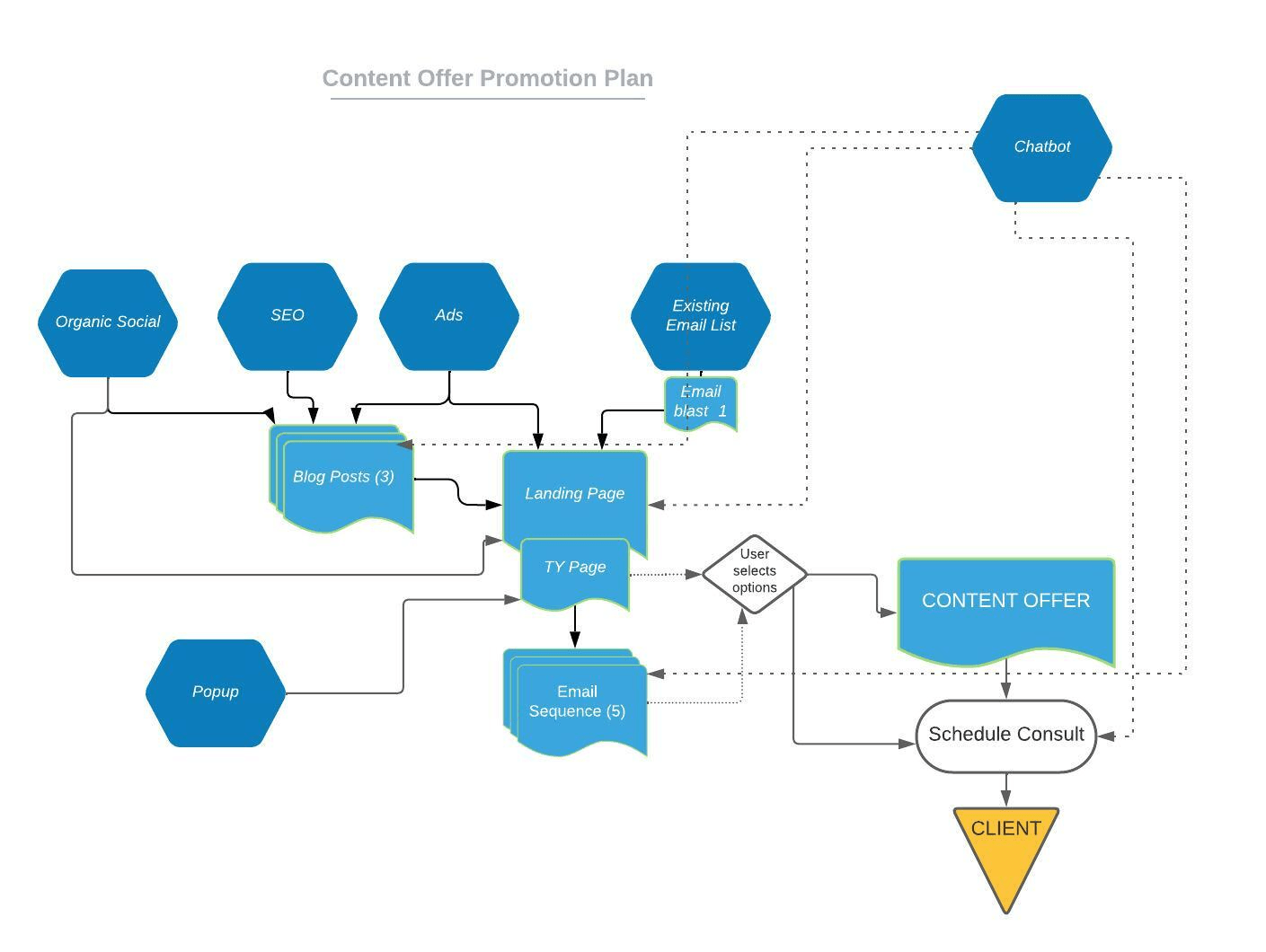
This graphic illustrates the different tactics to consider when launching a content offer.
Tactics such as a chatbot, SEO, organic social media, paid ads, email marketing, and popups on a website can be used to promote a content offer and should be considered with each offer.
Assets that need to be created for a promotion plan include all of the assets for the tactics which are chatbot, blog posts, landing pages, response pages (thank you pages), social media post copy and graphic, ad copy and graphics, email copy, and popups.